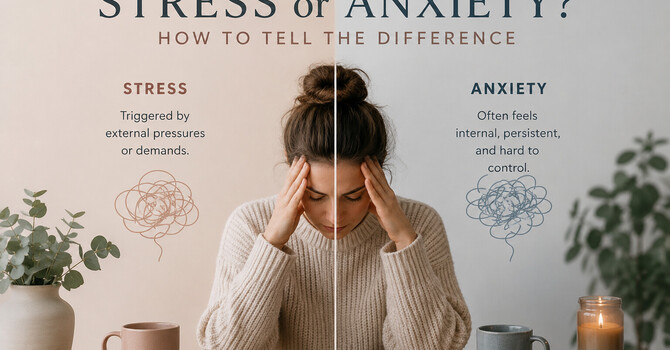
I have many clients who come to therapy wondering whether what they are experiencing is anxiety or obsessive-compulsive disorder (OCD). While the two conditions are closely related, they are not the same, and understanding the difference is important when it comes to getting the right support. Both anxiety and OCD can involve worry, intrusive thoughts, and distress, but the way the brain processes these thoughts — and how people respond to them — is very different. If you have ever wondered “Is this anxiety or OCD?”, this guide will help clarify the key differences. This is an informational Blog and OCD or anxiety disorders should be formally diagnosed by a medical professional such a Psychologist, Physician, or Clinical Psychologist.
What Is Anxiety?
Anxiety is a natural stress response that helps us prepare for potential challenges or threats. Everyone experiences anxiety at times, but for some people it becomes persistent and overwhelming.
- Common symptoms of anxiety include:
- Excessive worry about everyday situations
- Overthinking future events
- Difficulty relaxing or feeling constantly on edge Muscle tension or sleep problems
- Avoiding situations that feel stressful or uncertain
Anxiety often focuses on real-life concerns, such as work, relationships, health, or finances. For example, someone with anxiety might think:
- “What if I mess up this presentation?”
- “What if people judge me?”
- “What if something bad happens?”
These thoughts create worry, but they are usually connected to predictable life situations or future outcomes.
What Is Obsessive-Compulsive Disorder (OCD)?
Obsessive-compulsive disorder (OCD) is a mental health condition involving a cycle of intrusive thoughts and compulsive behaviours. OCD includes two core components:
1.Obsessions
Obsessions are repetitive, intrusive thoughts, images, or urges that create intense anxiety or distress. Common OCD obsessions include fears about:
- Contamination or germs
- Accidentally harming someone
- Making a mistake that causes harm
- Religious or moral concerns
- Unwanted aggressive or sexual thoughts
- Doubt about whether something was done correctly
These thoughts are not chosen and often feel very disturbing or out of character for the person experiencing them.
2.Compulsions
Compulsions are mental or physical actions performed to reduce the anxiety caused by obsessive thoughts. Examples include:
- Repeated checking (doors, appliances, messages)
- Excessive washing or cleaning
- Seeking reassurance from others
- Repeating actions until they feel “right”
- Mental rituals like counting, praying, or reviewing events
While compulsions may bring temporary relief, they reinforce the OCD cycle, causing the intrusive thoughts to return even stronger.
The Key Difference Between Anxiety and OCD
The main difference lies in how the brain attempts to resolve distressing thoughts.
Anxiety Pattern Worry → Stress → Overthinking or Avoidance
OCD Pattern Intrusive thought → Anxiety → Compulsion → Temporary relief → Thought returns In OCD, the brain becomes trapped in a repetitive loop, where compulsions keep the intrusive thoughts alive.
Real-Life Examples Anxiety Example
Someone leaves the house and briefly wonders: "Did I turn the stove off?" They check once, feel reassured, and move on.
OCD Example
The same thought appears repeatedly: "What if I didn’t turn the stove off? What if the house burns down?" The person may:
- Check the stove multiple times
- Take photos to confirm it’s off
- Return home to check again
- Mentally replay leaving the house Even after checking, the doubt returns.
This is often called the “doubt cycle” of OCD.
Why OCD Is Often Misunderstood
OCD is commonly misunderstood as simply being organized or perfectionistic, but real OCD is much more complex.
Many people with OCD struggle with intrusive thoughts that feel frightening, disturbing, or completely inconsistent with their values.
Because of shame or fear of judgment, many individuals keep these experiences private for years before seeking help.
Can You Have Both Anxiety and OCD?
Yes. OCD is closely related to anxiety disorders, and many people experience both anxiety and OCD symptoms. For example, someone with OCD may also experience: Generalized anxiety Panic attacks Perfectionism Intolerance of uncertainty However, OCD often requires specialized treatment approaches that specifically target the obsession-compulsion cycle.
Effective Treatment for Anxiety and OCD Both anxiety and OCD are highly treatable with evidence-based therapy. Common approaches include:
Cognitive Behavioural Therapy (CBT) CBT helps people identify patterns of thinking that increase anxiety and develop healthier responses to distressing thoughts.
Exposure and Response Prevention (ERP) ERP is considered the gold-standard treatment for OCD. It helps people gradually face feared thoughts or situations while resisting compulsive behaviours. Over time, the brain learns that anxiety naturally decreases without compulsions.
Acceptance and Commitment Therapy (ACT) ACT helps people develop psychological flexibility and reduce the struggle with intrusive thoughts. Instead of trying to eliminate thoughts, the focus shifts to changing how we respond to them.
When to Seek Support
- You may benefit from professional support if:
- Intrusive thoughts are difficult to control
- Worry or compulsions take up significant time
- Anxiety interferes with work, relationships, or daily life
- You feel stuck in repetitive thinking patterns
Therapy can help you understand your mind, reduce anxiety, and regain a sense of control.
Anxiety and OCD Counselling in Sherwood Park, Alberta
If you are struggling with anxiety, intrusive thoughts, or obsessive-compulsive patterns, you don’t have to manage it alone.
I provide counselling for teens and adults experiencing anxiety and OCD, offering: In-person sessions in Sherwood Park, Alberta Virtual therapy across Alberta Evidence-based approaches including CBT and ACT Support is available, and meaningful change is possible.

Tara Webber
Contact Me