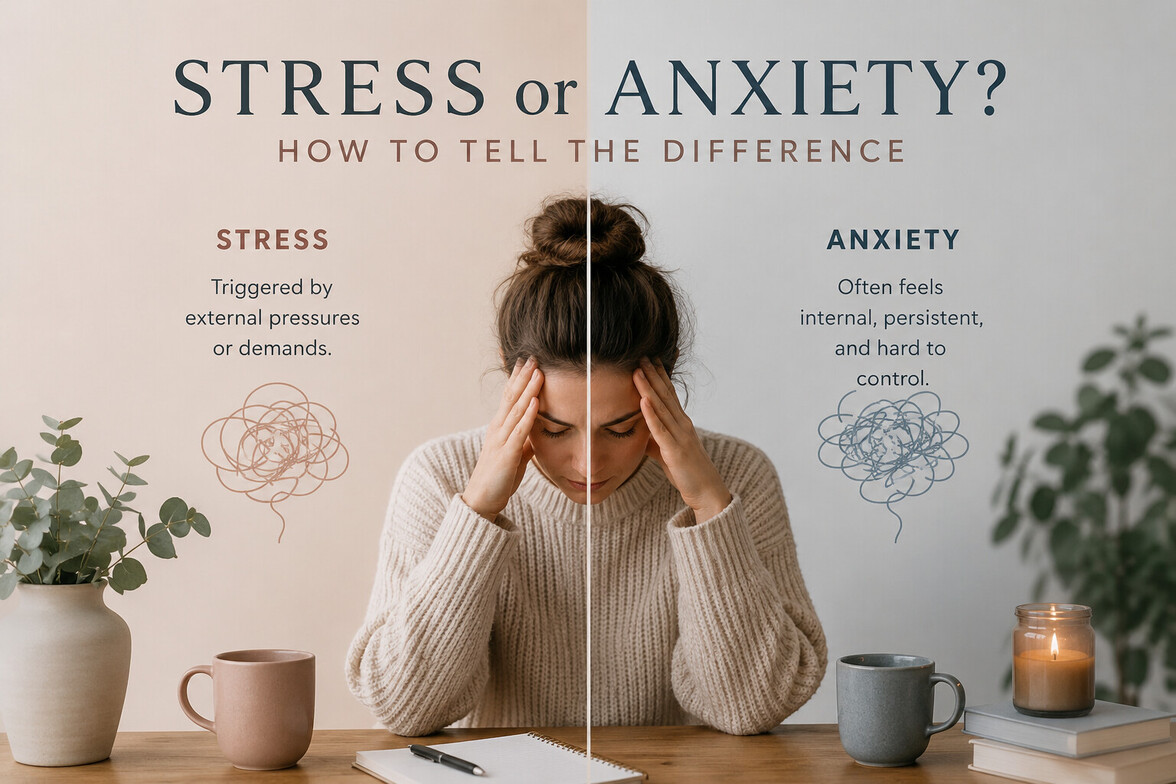
Many of my clients come to therapy wondering if what they are experiencing is stress or anxiety.
People use the words stress and anxiety interchangeably, but they are not quite the same thing. Both can feel overwhelming, affect sleep, impact concentration, and leave you feeling emotionally drained. Yet understanding the difference can help you respond to what you are experiencing with more clarity and self-compassion.
What Is Stress?
Stress is often connected to an identifiable situation or pressure in your life. It is your mind and body responding to demands that feel difficult, overwhelming, or emotionally taxing. Common stress triggers may include:
- Work or school pressures
- Family responsibilities
- Financial worries
- Relationship conflict
- Major life changes
- Health concerns
- Feeling stretched too thin
Stress usually has a specific cause, even if there are multiple contributing factors. You may notice that your stress levels rise during busy periods and improve once the situation changes or resolves.
- Common Signs of Stress
- Stress can show up emotionally, mentally, and physically. You might notice:
- Feeling overwhelmed or irritable
- Trouble sleeping
- Muscle tension or headaches
- Difficulty concentrating
- Feeling emotionally exhausted
- Increased frustration or impatience
- Feeling constantly “on edge”
While stress can be uncomfortable, it is also a normal human response to challenging situations.
What Is Anxiety?
Anxiety can sometimes begin with stress, but it often continues even when there is no immediate problem or danger present. Anxiety tends to involve persistent worry, fear, or anticipation about what might happen. The mind can become focused on worst-case scenarios, uncertainty, or a sense that something bad is around the corner. Unlike stress, anxiety does not always have a clear trigger.
Common Signs of Anxiety Anxiety may include:
- Excessive worrying Racing thoughts
- Difficulty relaxing
- Panic or fear Physical symptoms such as a rapid heartbeat, nausea, dizziness, or chest tightness
- Avoiding situations due to fear or discomfort
- Feeling stuck in cycles of overthinking
- Many people with anxiety describe feeling mentally “switched on” all the time, even when they want to rest.
Stress vs Anxiety: A Helpful Way to Think About It
A simple way to think about the difference is this:
- Stress is often connected to an external situation or demand.
- Anxiety is often more internal and persistent, even when there is no immediate threat.
For example:
- Feeling overwhelmed before a major deadline may be stress.
- Continuing to feel intense worry weeks later, or fearing failure constantly, may be anxiety.
Of course, stress and anxiety can overlap. Chronic stress can increase anxiety, and anxiety can make everyday stress feel even harder to manage.
When Should You Seek Support?
It may be helpful to reach out for support if stress or anxiety is:
- Affecting your sleep or physical health
- Impacting work, school, or relationships
- Leading to avoidance or isolation
- Causing constant worry or emotional exhaustion
- Making it difficult to enjoy daily life
You do not need to wait until things feel unbearable before seeking help. Counselling can provide a supportive space to better understand your experiences, develop coping strategies, and build emotional resilience. Approaches such as Cognitive Behavioural Therapy (CBT), Acceptance and Commitment Therapy (ACT), mindfulness, and nervous system regulation strategies can all help people learn to respond to stress and anxiety in healthier and more sustainable ways.
Final Thoughts
If you have been asking yourself, “Is this stress or anxiety?” you are not alone. Many people struggle to tell the difference, especially during busy or emotionally demanding seasons of life. Rather than judging yourself for how you are feeling, it can help to become curious about what your mind and body may be trying to communicate. With support, self-awareness, and practical tools, it is possible to feel more grounded and connected again. If you are looking for support with stress, anxiety, or overwhelm, learn more at https://taraleighcounselling.ca/

Tara Webber
Contact Me